FreeFree · MIT
Something for almost every job.
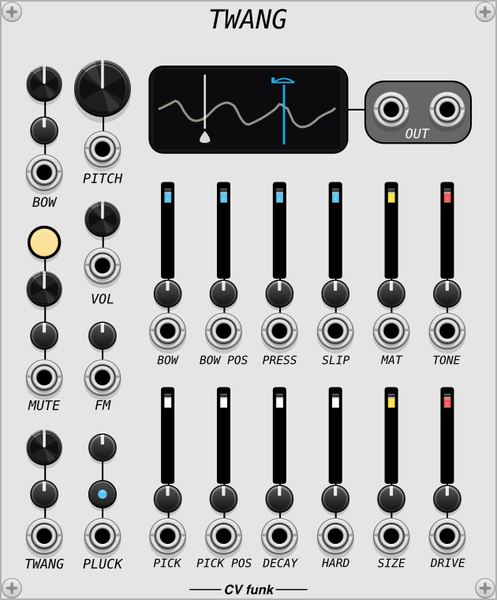
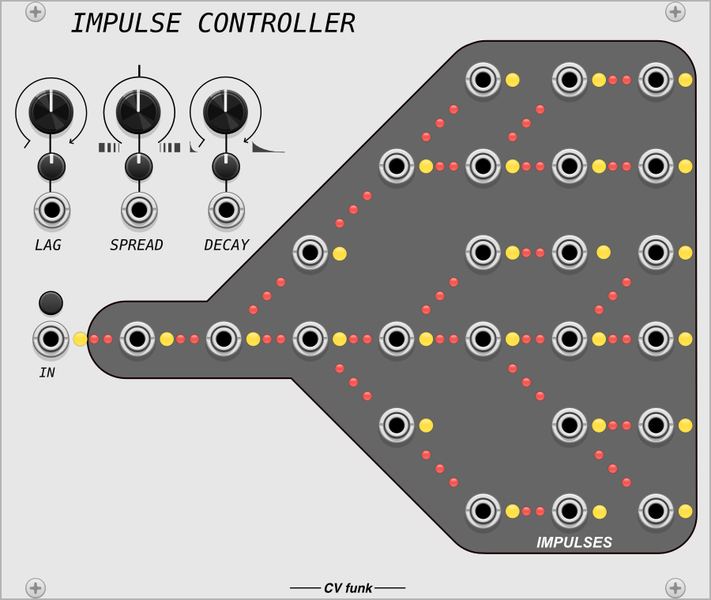
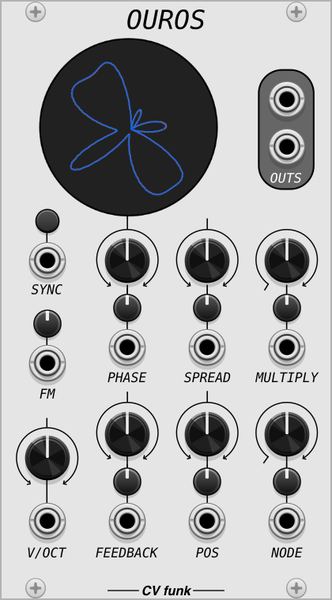
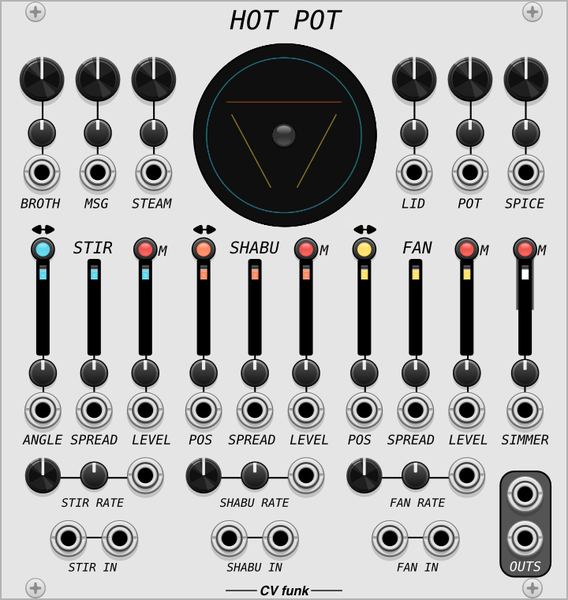
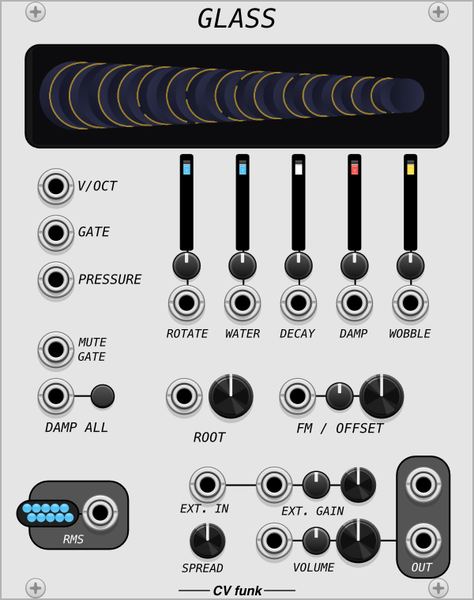
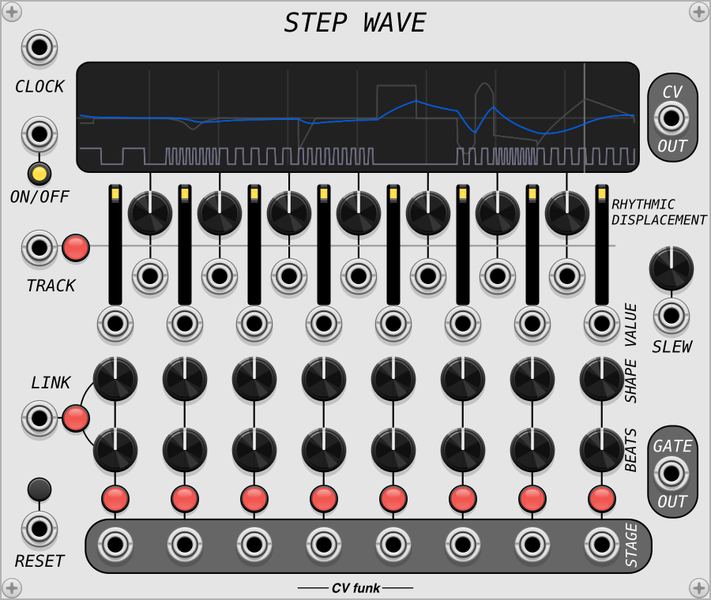
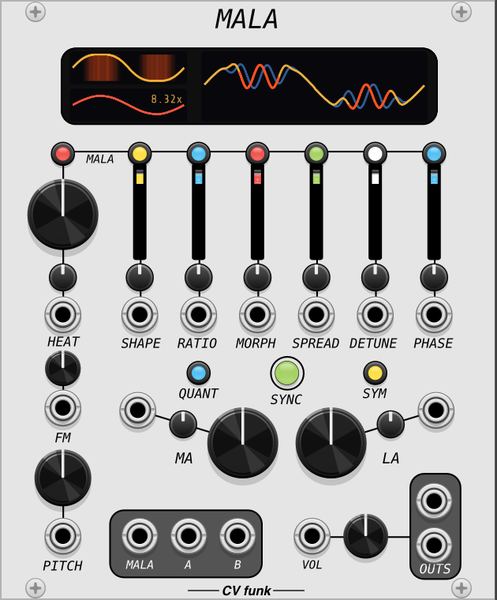
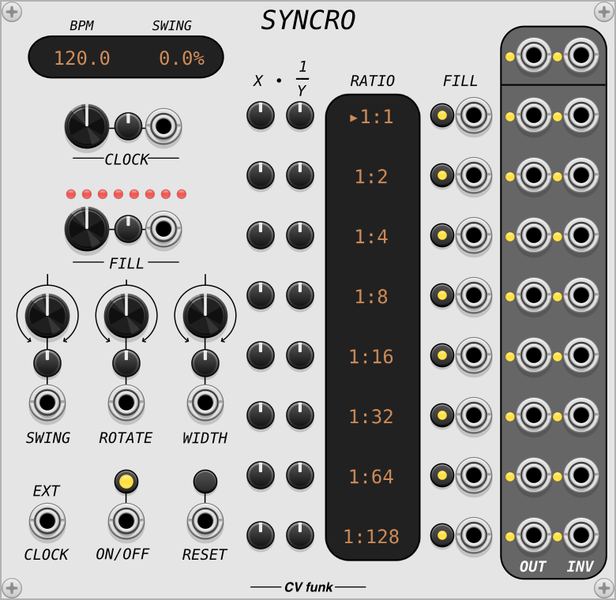
Envelopes, sequencers, clocks, macro controllers, oscillators, physical models, mixers and effects. This is the core of CV funk, and it's where many of the best modules live. Free and open source.

Modules for VCV Rack that reward patching.
Expressive modulation, sequencing and patch-programmable control: envelopes, sequencers, clocks, macro controllers, oscillators, physical models and effects. Simple inputs, complex results, and everything is designed to be patched into everything else.
64 modules4 collections48 free and open source
The free collection covers almost every category on its own, and many of the best CV funk modules are in it. The three premium collections each go deeper in one direction, and their sales are what keep the free modules free.
Something for almost every job.
Envelopes, sequencers, clocks, macro controllers, oscillators, physical models, mixers and effects. This is the core of CV funk, and it's where many of the best modules live. Free and open source.
For 16-voice polyphonic workflows, and an experimental complex oscillator.
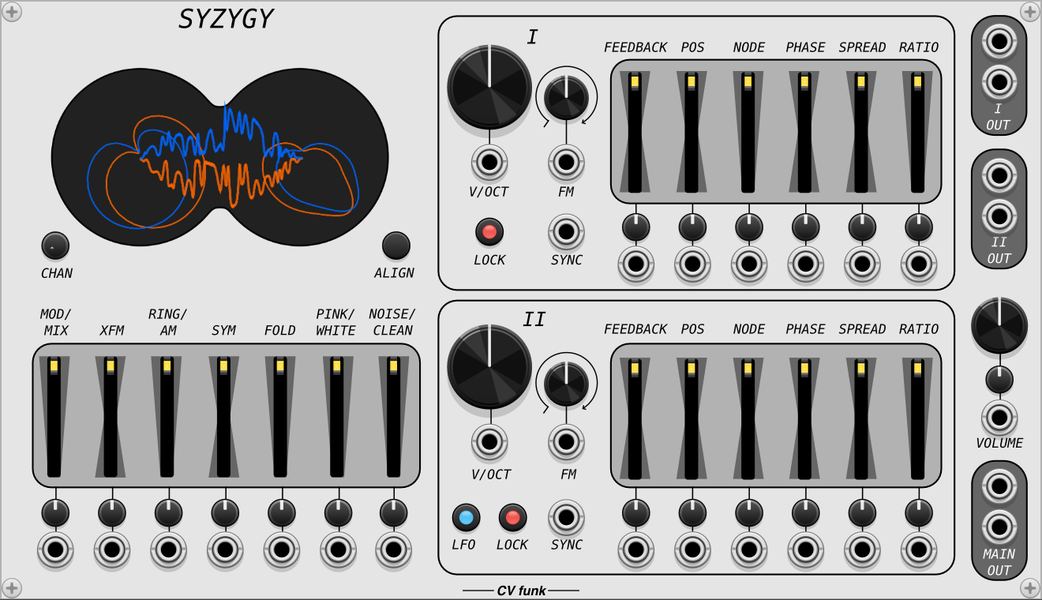
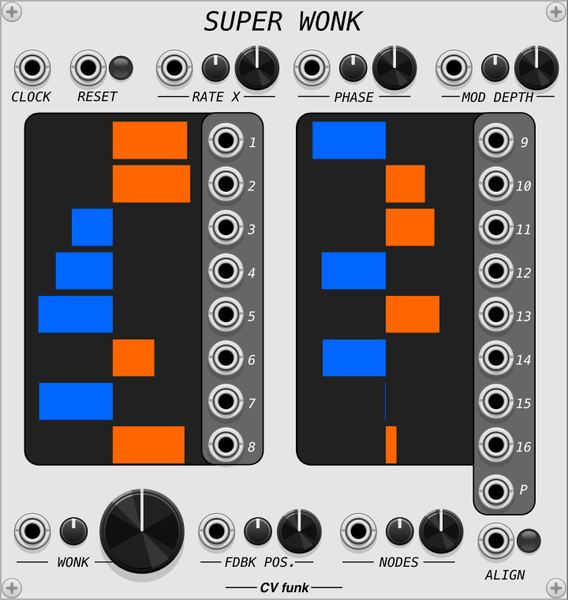
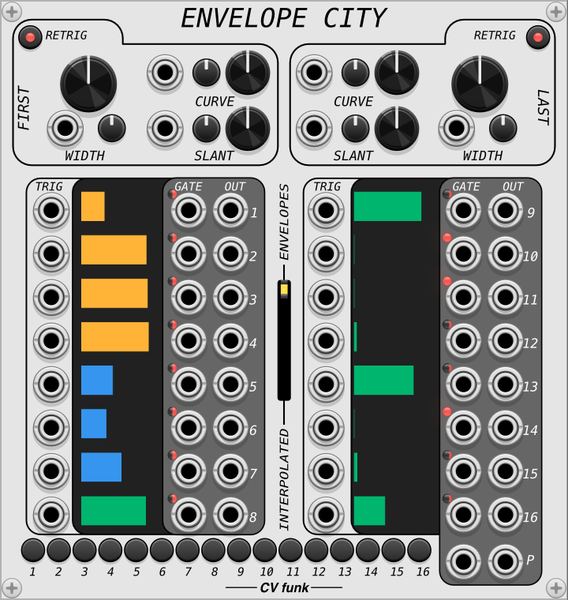
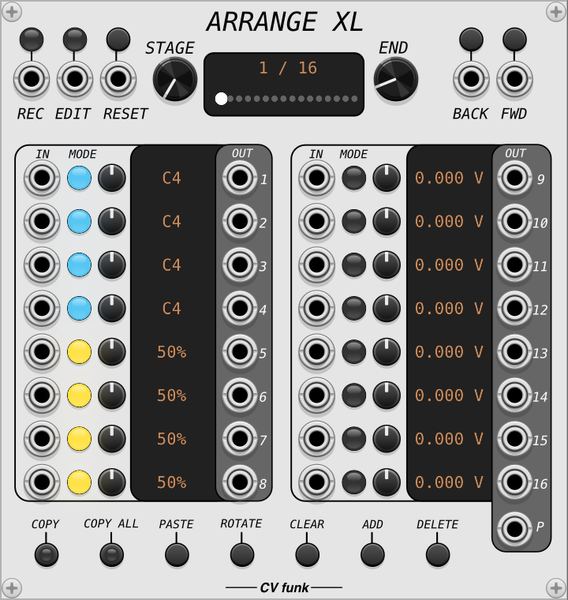
SYZYGY, a complex oscillator grown from OUROS, alongside 16-channel takes on the sequencer (ARRANGE XL), the envelope generator (ENVELOPE CITY) and the LFO (SUPER WONK).
For automating and sequencing chords and complex strumming rhythms.
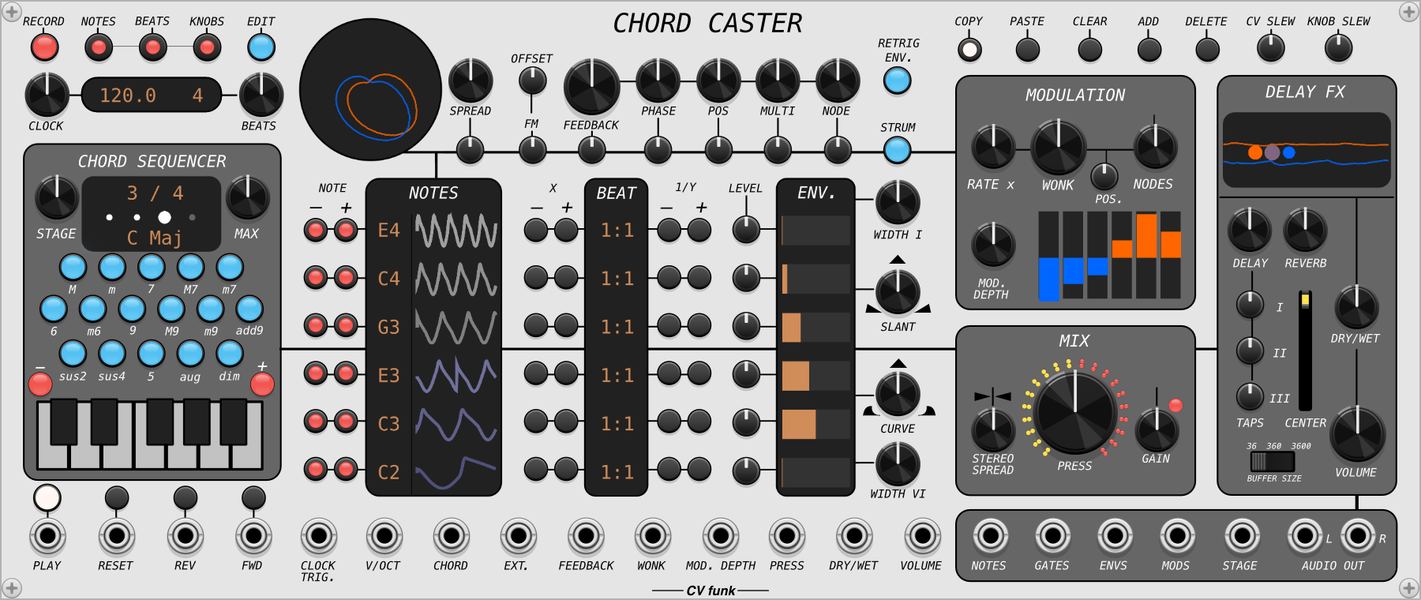
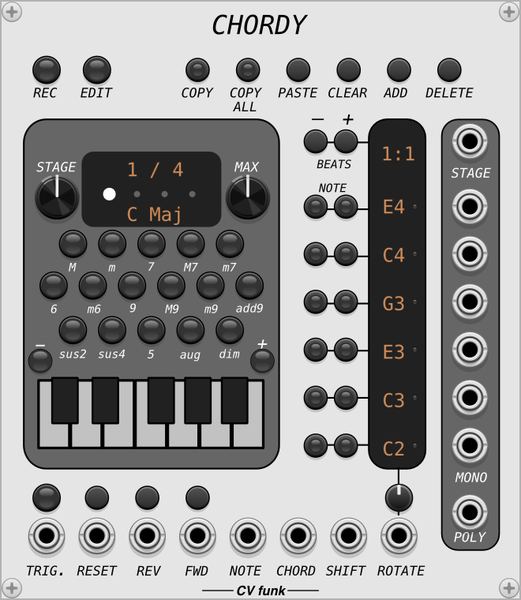
CHORD CASTER sequences chords, voicings and strum patterns bar by bar through its own six-voice oscillator, modulation, mixer and delay. Every step can recall all 42 knobs and 20 buttons. POLY MAP and CHORDY extend it.
A themed, non-linear synth engine.
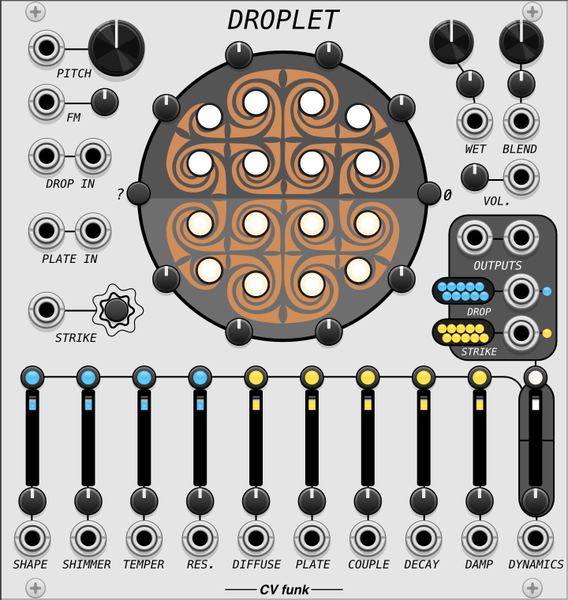
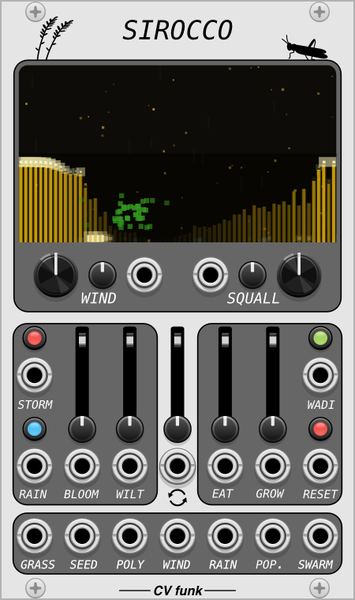
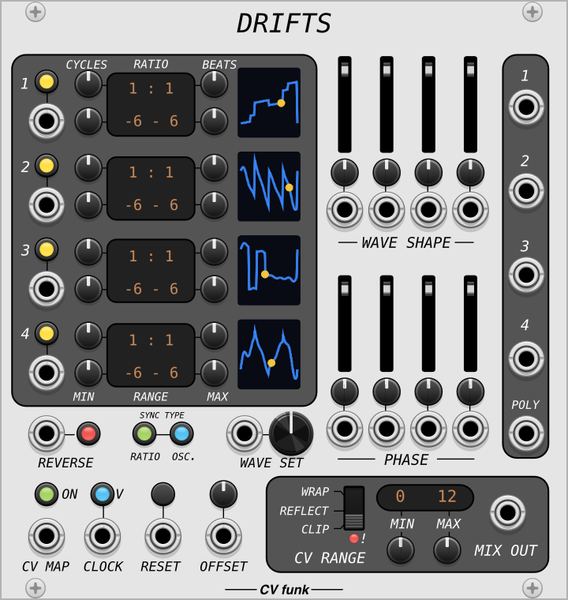
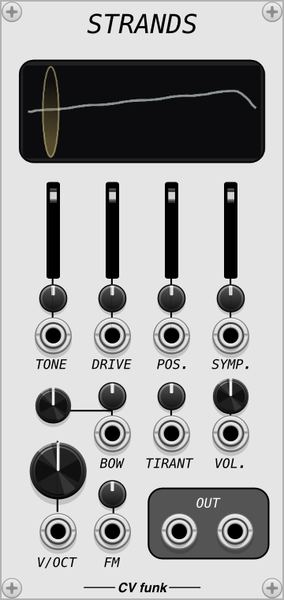
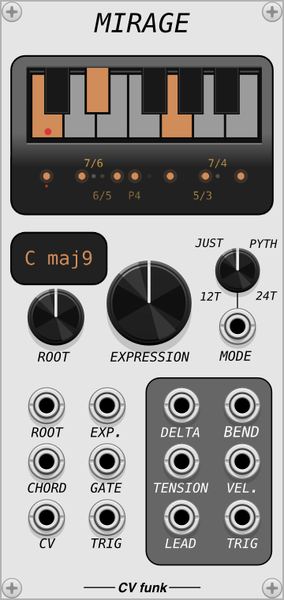
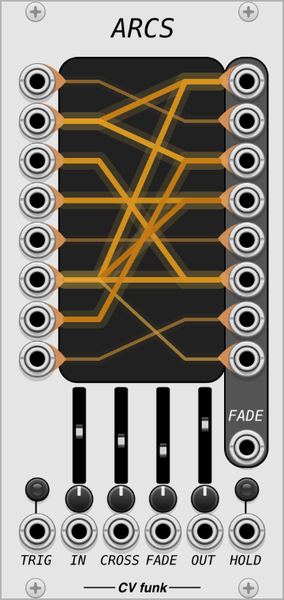
A self-contained ecosystem that needs few other modules: physical models (DROPLET, STRANDS), a living desert (SIROCCO), morphing oscillators (ZEPHYR, DRIFTS), probabilistic routing (ARCS), displaced rhythms (CROSSWINDS, DUNES) and a chord-aware quantizer (MIRAGE).

Cody Geary
Hi, I’m Cody. I’m a scientist from California living in Germany, where I study how RNA molecules fold into shapes and assemble into larger structures for synthetic cells. Outside the lab, I build synthesizers.
I make CV funk, a collection of modules for VCV Rack built around modulation, sequencing, feedback, and systems that reward experimentation. I’m drawn to instruments that are less about producing a predetermined result and more about creating the conditions for something unexpected to happen.
There’s a natural overlap with my scientific work. In the lab, I think about how molecules fold, move, and interact to produce complex behavior. In the rack, I explore similar questions with signals, algorithms, and patch cables. The materials are different, but I’m interested in the same general problem: how do you build something from simple parts that can do more than you explicitly programmed it to do?